What does it mean when a breaker keeps tripping?
A breaker that trips once or twice after a storm or a plugged-in appliance is usually nothing to worry about. But a breaker that trips repeatedly, especially on different circuits or at odd times, often points to something deeper inside the electrical system. In many homes the panel itself, the main distribution point for all the circuits, is the source of the trouble. When that happens, a professional panel evaluation becomes the sensible next step before considering electrical panel replacement.
Tripping is the breaker doing its job. It cuts power when it senses an overcurrent, a ground fault, or an arc fault. Those are all safety responses. The question is why the fault is happening in the first place. A single circuit with too many loads, like a kitchen counter running a toaster, a coffee maker, and a microwave at the same time, will trip because the breaker is sized for a certain amp rating. That is a load problem, not a panel problem. But when the tripping happens on a circuit that has not changed its load, or when it happens on multiple circuits, the panel itself may be degrading.
Older panels, particularly those with bus bars that are no longer in good condition, can develop hot spots. Loose connections inside the panel create resistance, and resistance generates heat. That heat can cause the breaker to trip even when the circuit load is normal. Burn marks near a breaker slot or on the panel cover are a visible clue. Another sign is a breaker that feels warm to the touch after normal use. Those are not things to ignore. They suggest that the connection between the breaker and the bus bar is not clean, or that the bus bar itself has corrosion or heat damage. An electrical panel evaluation in San Jose can catch these problems before they turn into a bigger hazard.
Ground faults are another common cause of persistent tripping. A ground fault happens when a hot wire touches a grounded surface, like a metal junction box or the grounding conductor itself. In a newer home, arc-fault circuit interrupters (AFCIs) are required in many rooms, and those breakers are especially sensitive to small arcs that older breakers might ignore. That sensitivity is a good thing, but it also means that a worn or loose connection in the panel can cause nuisance tripping. If the panel has not been updated in decades, the internal components may not meet current electrical code standards for grounding and clearance.
Overcurrent tripping, the kind caused by a short circuit or a dead short, is dramatic and unmistakable. The breaker snaps off with a loud click, and the circuit goes dead immediately. That kind of trip usually points to a problem in the wiring or an appliance, not the panel. But if the same breaker trips on a dead short repeatedly and the wiring checks out fine, the breaker itself may be failing. Breakers wear out. They are mechanical devices with a spring-loaded mechanism that can fatigue after years of cycling. A breaker that trips too easily or does not trip at all is a safety risk. Replacing a single breaker is straightforward, but if the panel is old or has evidence of heat damage, a full panel evaluation is the safer route.
There is also the question of clearance inside the panel. Electrical code requires a certain amount of working space in front of the panel and clear access to each breaker. Over time, panels can be buried behind drywall, stored items, or added cabinets. If the panel is difficult to reach or the cover does not fit properly because of added wiring, the internal components may not be getting enough airflow. Heat buildup inside a panel accelerates wear on breakers and can lead to nuisance tripping. A professional evaluation will check that the panel meets current clearance requirements and that the wiring inside is not crowded or pinched.
Another thing that a panel evaluation can reveal is an imbalance in the electrical load across the two legs of a 240-volt service. In a split-phase panel, the loads should be roughly balanced between the two hot buses. If one leg is heavily loaded and the other is light, the panel can run hotter on one side, and that can cause breakers on the loaded side to trip more often. This is not something a homeowner can check without a meter and an understanding of the panel layout, but it is a common finding in older homes where circuits were added over the years without regard to balance.
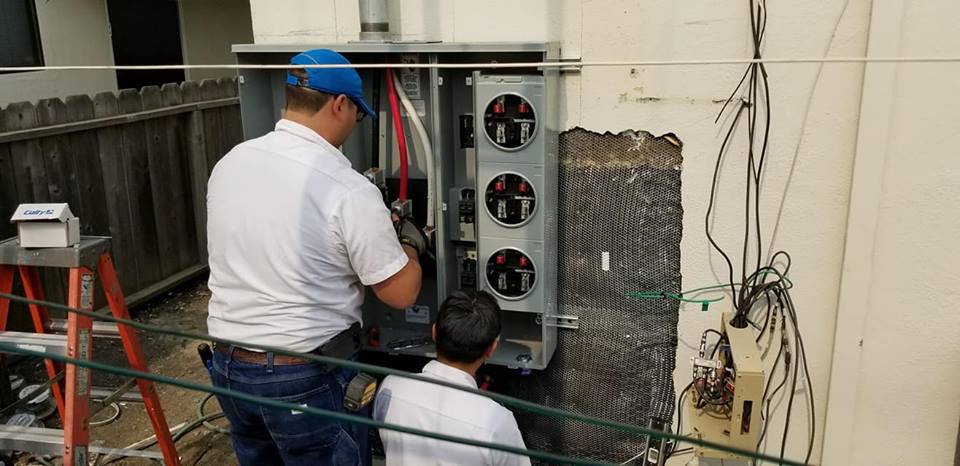
When the tripping becomes a regular event, it is tempting to just reset the breaker and carry on. But a breaker that trips several times a week is telling you something. The question is whether the problem is with the breaker, the circuit, or the panel itself. A methodical approach is to first rule out the obvious: unplug everything on the circuit, reset the breaker, and see if it holds. If it trips with nothing plugged in, the issue is in the wiring or the panel. If it holds, plug in one device at a time and watch for the trip. That tells you whether a single appliance is the culprit. If the trip happens randomly, even with different devices on different circuits, the panel is the common denominator.
At that point, a panel evaluation is not just helpful; it is necessary. A qualified electrician will open the panel (with the power off, of course), inspect the bus bars, check for burn marks or discoloration, test the tightness of connections, and measure the voltage and amperage on each circuit. They will also look at the grounding system to make sure the panel is properly bonded. In homes with older panels, particularly those from the 1960s and 1970s, the grounding may not meet modern code. An electrical panel evaluation in San Jose can identify these gaps and give you a clear picture of whether a repair or a full replacement is the right move.
Replacing a panel is a major job. It involves shutting off the main power, removing the old panel, installing a new one, and reconnecting every circuit. It also often requires upgrading the service entrance cable and the meter base if the existing equipment is outdated. But a full replacement is not always needed. Sometimes the issue is a single failing breaker, a loose neutral bus, or a corroded main lug. A professional evaluation will tell you exactly what is wrong and what the options are. That saves time and money, and it keeps the home safe.
A tripping breaker is not a problem to live with. It is a signal that something in the electrical system needs attention. Ignoring it can lead to a fire hazard, especially if the breaker is failing to trip when it should. If you are seeing repeated trips, especially on multiple circuits or at odd times, the panel is the logical place to start. A professional evaluation gives you a clear diagnosis and a path forward, whether that is a simple repair or a full electrical panel replacement.